
Biodance Collagen Face Mask Review
The Biodance Collagen mask is supposed to be the original Korean sheet mask that pumps collagen into your face as you sleep, but does it work? Here’s my review.
The Biodance Collagen face mask is supposed to be the original Korean sheet mask that pumps collagen into your face as you sleep, but does it work?
The Biodance Collagen face mask is a Korean sheet mask formulated to hydrate the skin, smooth texture, and temporarily soften the appearance of fine lines.
It’s designed to be worn overnight. The mask is white and opaque when you open the packet, then gradually dries and turns transparent as it dries. The idea is that it delivers hydration and collagen to your skin as you sleep, leaving it looking dewy, plump, and more elastic when you wake up.
Like the Official Quasi Bio-Collagen mask, I approached this one with some skepticism. Collagen is a large molecule, and topical collagen is not known to penetrate deeply into the skin. From a formulation standpoint, collagen mainly works as a surface-level humectant and film-former, so I was curious to see how noticeable the results would actually be.



Biodance has traditionally been priced higher than Quasi, although that gap has narrowed recently. Because of that, and its status as the OG overnight collagen mask, I expected the Biodance mask to perform at least as well - if not better.
For context, I’m in my 30s with early signs of ageing. I have fine lines on my forehead, visible pores, some smile lines, and light creasing under the eyes when I smile. I didn’t expect Biodance to fix any of those things, but I hoped it would make a few lines less visible and deliver a blast of hydration to my face.
Here’s what happened when I tried the Biodance Bio Collagen face mask.
Note: This post is not sponsored, but there are a few affiliate links. Clicking them will not cost you anything extra, but it will help me keep the site going :)
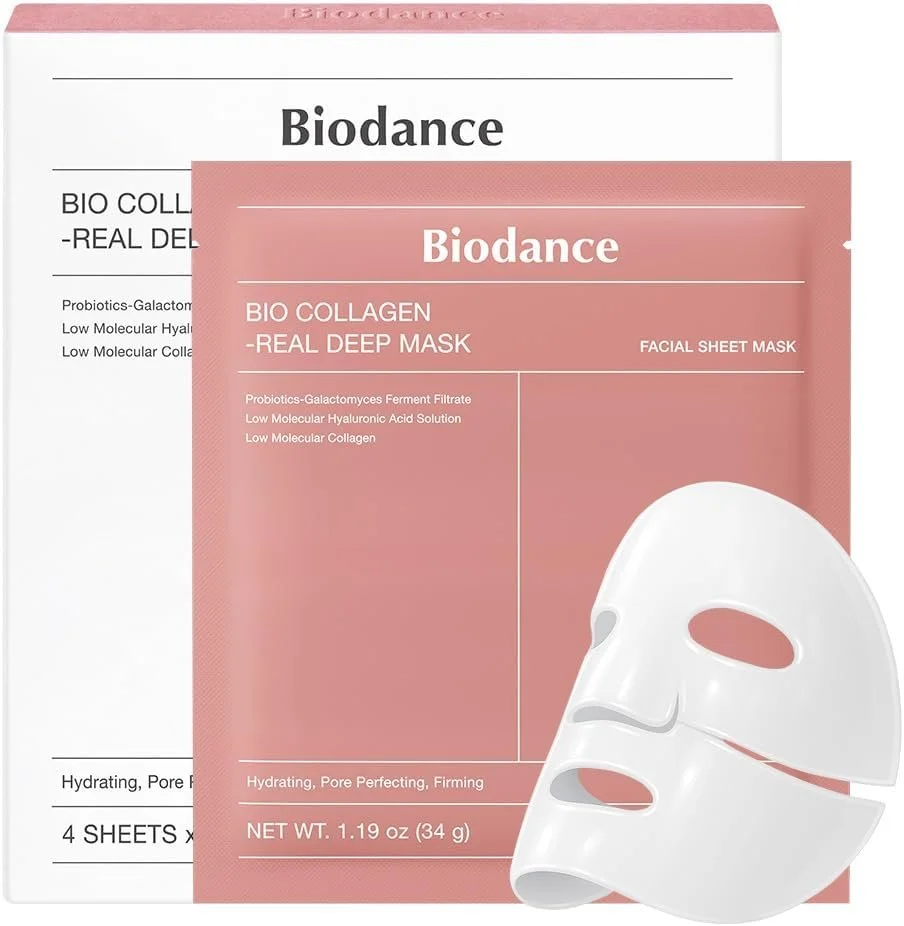
Biodance Collagen Mask: A Review
Biodance promises to refine enlarged pores, instantly improve skin elasticity and visibly smooth out the appearance of fine lines and wrinkles, according to the website.
It also apparently contains three different kinds of probiotics that strengthen the skin’s barrier and prevent skin aging, and is formulated with non-toxic and non-irritant ingredients.
Collagen in topical skincare does not rebuild or replace natural collagen. Instead, it works as a film-forming ingredient that helps reduce water loss while the product is on the skin.
This just means the mask is designed to hydrate, more than anything else. Like most products, the effects are temporary and require consistency for any long-term impact.
When I was reasearching whether to try Quasi or Biodance, I came across a lot of forums and reviews saying Biodance was the original Korean brand, Quasi was a dupe and not very good, and to always get Biodance.
The bar was set high, I expected great things.
What happened
I bought a box of four Biodance Collagen masks, because these masks always seem to come in packs of four - regardless of the brand.
As with the Quasi mask, I washed all the makeup off my face, using micellar water to make sure there was nothing left. I didn’t apply anything else to my face.
I moved the mask from the packet. It was opaque, white and jelly-like.
It comes in two pieces, one for the top half of your face and one for the bottom, so you can tailor it to fit.
There are two oval cut-outs where the eye holes are, so I put those ovals directly under my lower lash lines to ensure my under-eye area would get collagen. I then placed one half of the mask over my chin and lower cheeks, and the other half on my forehead, cheekbones, and around my eyes.
What I noticed was that the mask seemed a bit thinner than the Quasi mask, which was quite thick and durable. The Biodance mask ripped a little when I put it on, and it didn’t feel as secure as Quasi. It didn’t adhere to my skin very well in general, and started lifting a bit around the bridge of the nose once it started to dry.
The mask felt a bit like it might peel off before it was dry.
I was glad I put it on about an hour before going to bed, so it had a bit of time to dry before I lay down.
Sleeping with a collagen face mask
Biodance definitely didn’t feel securely stuck to my face as I went to sleep, and I was pretty worried it would come off. I find it difficult to sleep with a face mask on as it is - it feels damp and cold, and I’m always slightly worried it’s all going to come off on the sheets.
The mask did stay on for the most part, but I woke up at about 3am and pulled it off. There was noticeable lifting around the cheeks by that stage, the mask felt dry enough to remove, and I didn’t think it would last until morning.
The result
My face did look hydrated and dewy in the morning, and I definitely had a healthy glow that remained in place even with a full face of makeup on.
My skin felt smooth and hydrated. The fine lines on my forehead did dissipate a little, pores were a bit smaller, and smile lines weren’t as pronounced. The creasing under my eyes remained, but I think that’s a structural issue that can’t be resolved with a face mask.
But the dewiness didn’t last long. I found the glow from the Quasi mask lasted three or four days, whereas Biodance lasted two days at the absolute max.
By day three, I’d almost forgotten I did a collagen mask.
Pros
My skin did appear hydrated and firmer, and fine lines were slightly reduced. Make-up went on very easily, and my skin generally felt very smooth and pores slightly reduced in size. The mask was easy to use.
Cons
The mask itself was thin and ripped easily, and it didn’t feel as though it adhered to my skin properly. There was significant lifting from the edges as the mask dried, which meant it didn’t last all night. The results were also short-lived, only lasting for a day or two.
Verdict
I probably wouldn’t get the Biodance Collagen face mask again. Having already tried the Official Quasi collagen mask, I had high expectations and Biodance didn’t really compare.
I do think the thickness of the mask itself makes a big difference - a thicker mask means longevity as you sleep, and reduced lifting around the edges as the mask dries, which means better results. The more collagen that sits on your skin, the longer-lasting the effects will be.
The Biodance mask was relatively thin, and the results just weren’t as pronounced.
Cost is also a factor - Biodance is touted as the original collagen face mask, and has historically been more expensive, but there are new deals all the time and prices vary substantially.
At the time of writing, Biodance was $16.99, reduced from $19. But these prices change all the time.
Have you tried the Biodance Collagen mask, or do you prefer a different one? Let me know in the comments below!
You Might Also Like…


Biodance vs Quasi Bio Collagen Face Mask: Which is better?
Biodance and Quasi Bio Collagen Face Mask are overnight collagen face masks that promise to boost hydration, reduce the appearance of fine lines, and make your face look all dewy. But do they both work? And which one is better?
The Biodance Bio Collagen Face Mask and Official Quasi Bio Collagen Face Mask are overnight collagen face masks that promise to boost hydration, reduce the appearance of fine lines, and make your face look all dewy.
But do they both work? And which one is better?
I definitely have my own opinion on this, but today I’m looking at the science behind the face masks to work out which one is actually more effective.
Note: There are some affiliate links in this post. Clicking on them won’t cost you anything extra, it just helps me keep the site running :)
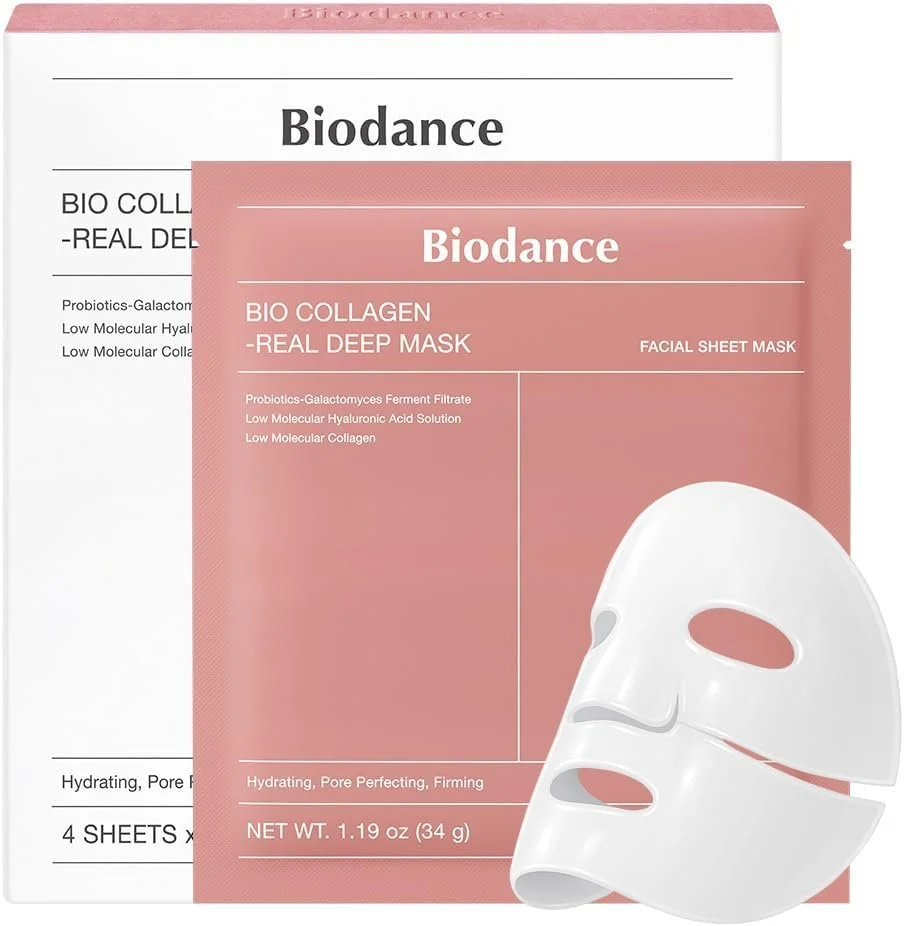
How hydrolysed collagen works
The Biodance Bio Collagen Mask and Quasi Bio Collagen Mask both use hydrolysed collagen, which is collagen that has been broken down into small peptides that are easy to mix into water-based products, like sheet masks.
These peptides primarily act as humectants that form a thin, hydrating film on the skin’s surface, and they’re pretty powerful.
Humectant: They are excellent at binding water to the very top layer of your skin.
Film-Former: They leave a thin, flexible, invisible layer on your skin.
This film, combined with the occlusive environment of the mask itself (the physical barrier that locks everything in), creates a hydration lockdown. This stops water from evaporating out of your skin.
The result? The top layer of your skin swells up with moisture, making it look instantly smoother, plumper, and bouncier. That satisfying firming effect you feel is incredible hydration.
| Feature | Biodance Bio-Collagen Real Deep Mask | Quasi Bio-Collagen Mask | Comparative summary |
|---|---|---|---|
| Key hydration technology | Hydrogel mask designed to solidify and turn transparent as ingredients are absorbed (can be worn up to 8 hours/overnight). | Hydrogel mask with similar long-wear technology, also designed to turn transparent as essence is absorbed. | Identical occlusion: both masks use the same core hydrogel delivery method, which is key to any long-term moisture benefit. |
| Collagen type | Ultra-low molecular weight collagen (as small as 243 Daltons). | Ultra-low molecular weight collagen. | Penetration advantage (claimed): Biodance publicly claims a smaller molecular size (243 Da), suggesting a slight edge in getting peptides into the upper epidermis. |
| Main hydrating agent | Oligo-hyaluronic acid (ultra-low molecular weight). | Oligo-hyaluronic acid (ultra-low molecular weight). | Identical efficacy: both use the most advanced, small-particle HA designed for deeper epidermal absorption. |
| Barrier-building ingredients | Galactomyces ferment filtrate, probiotics, niacinamide. | Galactomyces ferment filtrate, probiotics, niacinamide. | Identical long-term benefit: both formulas contain the same proven, gold-standard ingredients for skin brightening, barrier repair, and elasticity. |
| Specific clinical metrics | Publicly cited: 166% moisture increase after 150 hours. | No publicly cited metrics: marketing focuses on ingredients (collagen, niacinamide, ferments) and the hydrogel's visual transformation. | Key difference: Biodance offers specific, published (though proprietary) numbers, giving consumers a quantifiable reason to believe the mask's effects are long-lasting. |
How effective is hydrolysed collagen?
Hydrolysed collagen is a powerful moisturising agent, but it’s not a long-term solution.
It’s not a restorative product that rebuilds structural collagen deeper in the dermis. That’s because the collagen sits on the skin, rather than penetrating it.
Hydrolysed collagen actually only increases hydration for about two to four hours — the effect fades as the film breaks down.
By comparison, hyaluronic acid and ceramides work within the stratum corneum — the outer layer of the skin — to hold water and strengthen the lipid barrier. Their effects can last six to eight hours or longer, depending on concentration and delivery method.
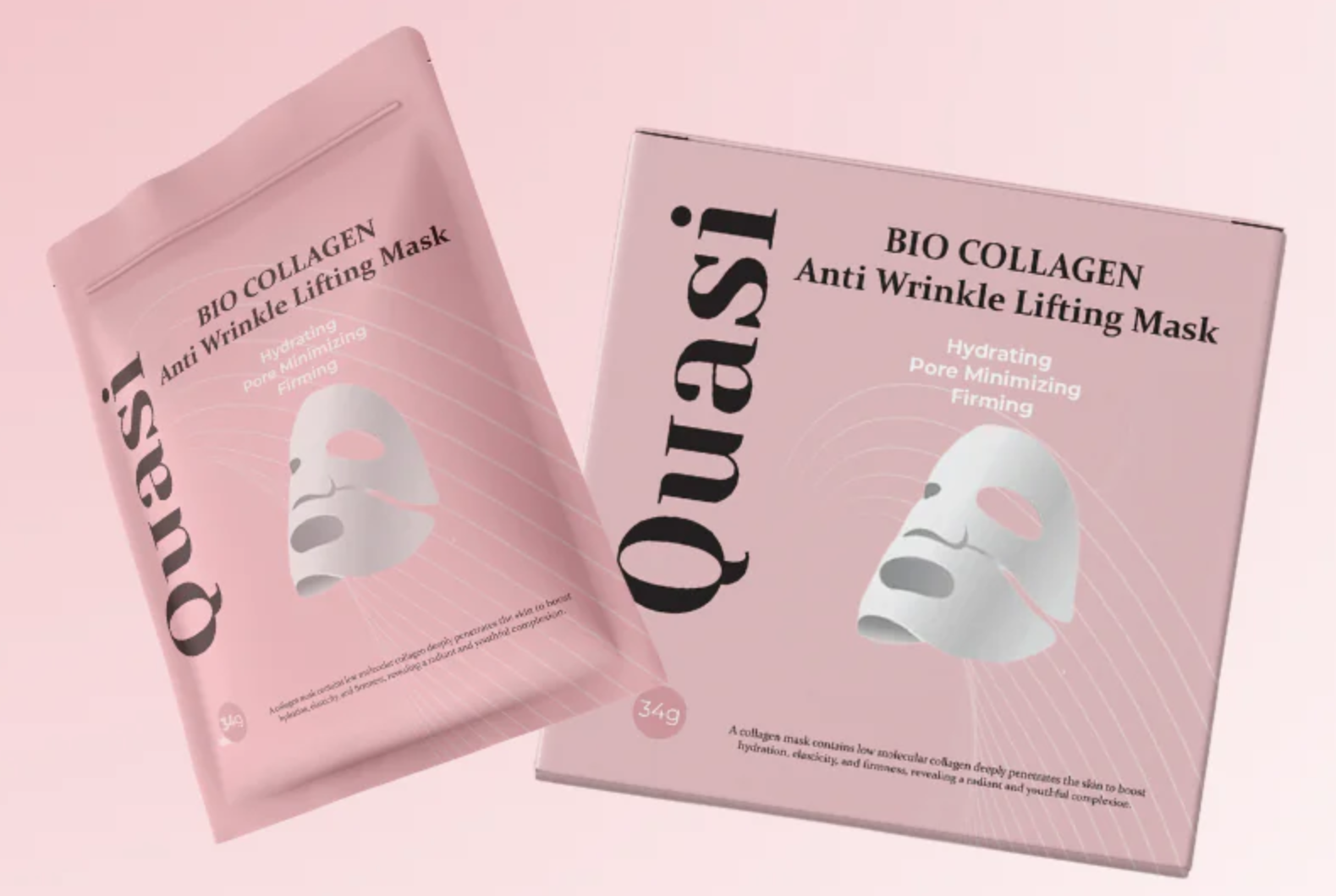
Debunking claims
The Biodance Bio Collagen Mask specifically markets its formula as being superior in absorption due to the size of its key molecules:
Ultra-Low Molecular Weight Collagen: Biodance claims to use collagen peptides with a very small size (as low as 243 Daltons). The idea is that the smaller the molecule, the better it can penetrate the stratum corneum (the outermost layer of the skin). While topical collagen doesn't reach the deeper dermis to rebuild natural collagen, smaller peptides can theoretically penetrate the upper layers of the epidermis more effectively than larger ones, enhancing surface hydration and plumping.
Oligo-Hyaluronic Acid: Similarly, Biodance uses ultra-low molecular weight hyaluronic acid, which is designed to penetrate deeper into the epidermis compared to high molecular weight hyaluronic acid, providing moisture across multiple surface layers.
There is limited research about Quasi, but those masks also use the advanced, occlusive hydrogel technology that presses the essence against the skin for hours. This prolonged contact time greatly enhances the absorption of all its ingredients, which include similar high-efficacy components like niacinamide and ferments.
Biodance has a specific molecular advantage, but both masks deliver powerful ingredients through the common advantage of prolonged hydrogel application.
Mask adhesion and wear
Both use bio-cellulose or a similar material that is prized for its excellent adhesion and close fit. The mask starts thick and slowly dissolves into the skin over several hours (three or four hours, or overnight).
This unique process is highly effective at delivering intense moisture.
Lasting hydration
Based on their ingredient lists, both masks offer high levels of hydration and are effective at smoothing and calming the skin.
Biodance emphasises its precise low-molecular-weight ingredients, which the brand's own studies claim result in moisture effects that last for over 150 hours.
Quasi relies heavily on the proven benefits of its galactomyces and niacinamide blend for brightening and barrier strength, alongside its collagen.
Which mask is more effective?
Both the Biodance Bio Collagen Mask and the Official Quasi Bio Collagen Mask use high-quality, similar formulations and hydrogel technology.
The Biodance mask delivers excellent surface moisture and smoothing benefits through its collagen content, which provides a temporary plumping effect.
The Quasi mask, like Biodance, uses a blend of collagen, galactomyces ferment filtrate, and niacinamide to support hydration and the skin barrier.
Because both products share core barrier-repairing and hydrating ingredients, both masks are effective for intense surface hydration and barrier support during long wear.
Which one is better value?
Collagen face masks are not long-term fixes for aging skin, but that doesn’t mean they’re not a quality addition to your skincare routine. The hydration and dewy glow they provide is almost unparalleled, even if it is only a short-term solution.
Topical hyaluronic acid is also a short-term solution, but I wouldn’t stop using that.
At the end of the day, Quasi and Biodance are very similar.
The key differences are cost and marketing claims. Biodance has more scientific data to back claims, while Quasi only really has claims.
At the time of writing, Biodance cost $19 for four masks, while Quasi cost $21.99 for eight masks.
Personally, I preferred Quasi because the sheet mask itself was thicker and more durable than the Biodance mask. But that was just my experience.
My recommendation? Pick whichever one is on sale.
Which one is your favourite? Let me know in the comments below!
You Might Also Like…

Quasi Bio-Collagen Mask Review
It feels like every skincare product on the market at the moment is promising to refine my pores and give me dewy glass skin. But do they work? I tried the Official Quasi Bio-Collagen Mask to find out. Here’s what happened.
It feels like every skincare product on the market at the moment is promising to give you glass skin. But do they work? I tried the Official Quasi Bio-Collagen Mask to find out. Here’s what happened.
Bio-collagen face masks seem to be everywhere, specifically the kind that you leave on for hours at a time. You can even sleep in them. I’ve seen so many videos of women putting white sheets on their faces, apparently going to bed, and in the morning peeling the mask off to reveal shiny, bouncy and glowing skin underneath. As the mask dries overnight, it turns from hospital white to transparent. That’s how you know it works, so they say.
I was skeptical because collagen isn’t easily absorbed through the skin so the impact of any collagen face mask is always going to be temporary. But that’s the case with most products — they all require consistent reapplication, so that wasn’t a deal breaker for me. The ads feature women of all ages, not just people in their 20s with great skin already. They’re also cruelty-free. I was in.
Note: This post is not sponsored, but there are a few affiliate links. Clicking them will not cost you anything extra, but it will help me keep the site going :)
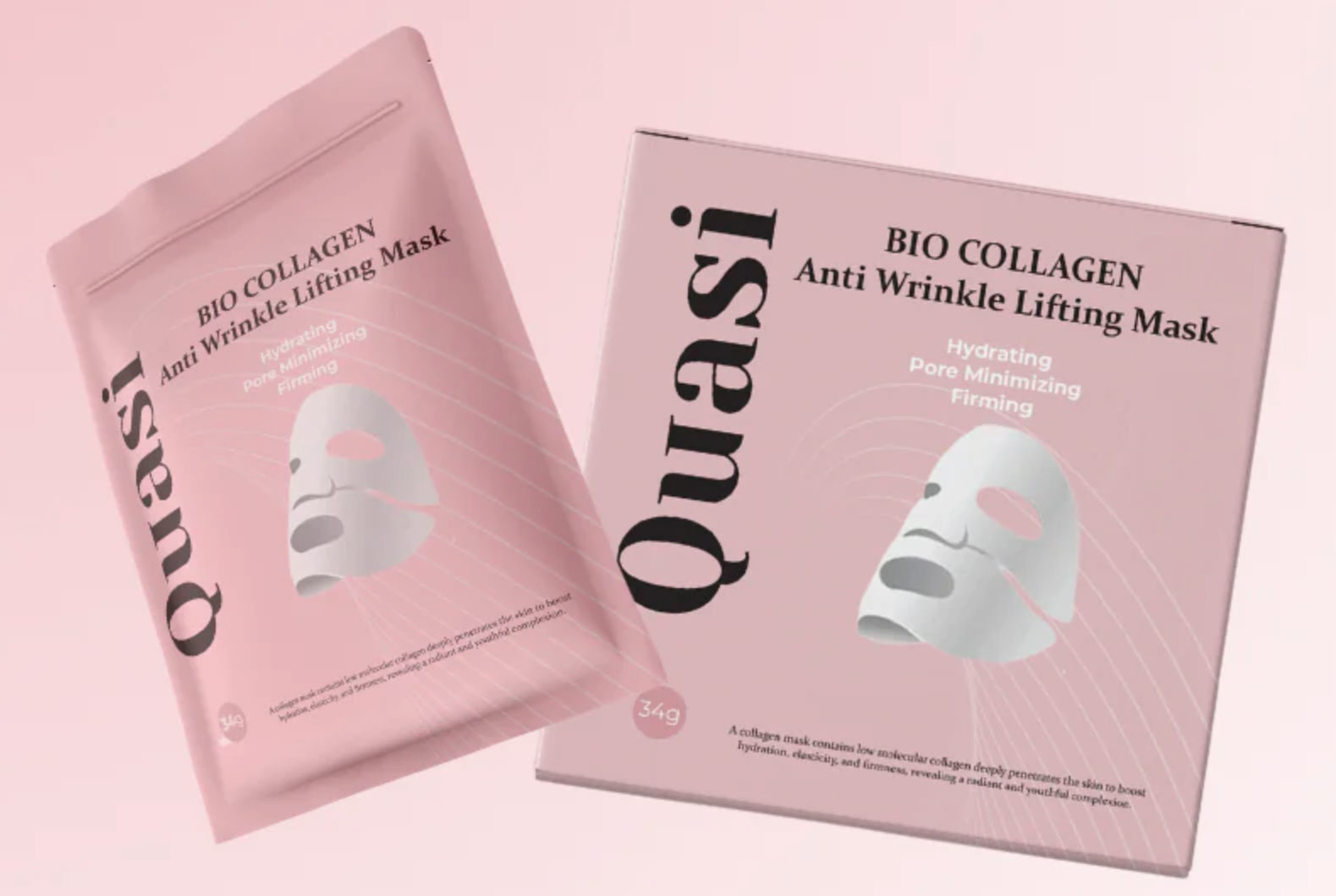
Quasi Bio-Collagen Face Mask: A Review
There are a few different collagen face mask brands that claim to do the same thing. I went with Quasi because the ads were literally on my Instagram feed for months, and I don’t follow them. They had stacks of user videos and good reviews that seemed legit. I do plan on trying a few other brands, but I had to pick one to start with, and it was Quasi.
According to the website, these masks reduce pores, reduce fine lines and wrinkles, and give you plump, firm and glowing skin. Key ingredients include galactomyces, which is a fermented essence that is absorbed by the skin while brightening and firming. Oligo hyaluronic acid is absorbed very easily by the skin due to its low molecular weight, providing intense moisturisation. Low-molecular-weight collagen helps minimise pores and increase elasticity, and niacinamide which helps build keratin to maintain skin health.
What happened
I bought four packs of four in the sales after Christmas. Apparently, the masks should be used weekly, so that’s what I planned to do.
I washed all the makeup off my face, using micellar water to make sure there was nothing left. I didn’t apply anything else to my face. The mask was thick, white and jelly-like. It comes in a few pieces so you can tailor it to fit. There are two oval cut-outs where the eye holes are, so I put them directly under my lower lash lines to ensure my under-eye area would get collagen as well. I then placed one half of the mask over my chin and lower cheeks, and the other half on my forehead, cheekbones, and eyes. A have a small face, there was a fair bit of overlap in the middle, it didn’t seem to matter.
It went on very smoothly. I used my new Gua Sha to smooth it all down and make sure there were no air bubbles. It didn’t fall off and didn’t feel as though it was going to. It did feel damp and I wondered how it would go in bed. I waited up for about 45 minutes before going to bed. It dried a bit, but it was still dampish to touch.
Sleeping with a face mask on
Sleeping in a face mask was weird. I didn’t love it and I wouldn’t recommend it. I kept feeling as though it was going to stain the sheets (it didn’t) or come off in my sleep (it didn’t), and I woke at one point and felt very aware that it was on my face. It must have been about 4am when I decided I’d had enough. It had been on for six hours at that point, more than enough time, so I peeled it off and went back to sleep.
I had some regrets because I didn’t have that big reveal moment in the ads, where you peel it off and your skin looks amazing. But I remembered one of Quasi’s many ads that shows a woman washing her face immediately after taking her mask off to prove the dewy glass-like texture was her skin, rather than product residue from the mask. For those reasons, I figured my skin should still look like that in three hours when my alarm went off.
The result
My face did not look dewy the next day and I think that was to do with going back to sleep with my face on sheets, but I was pretty happy with the results anyway. My skin looked firm and brighter and make-up went on very easily. It did feel as though my skin had a boost of something and there was a healthy glow about it. My skin felt smoother for a few days, though I’m not sure how noticeable that was to anyone but me.
I used it again a week later, but this time I kept it on all night and peeled it off slowly in the morning. As promised, the mask had turned from hospital white to transparent. It looked like a completely different product by the time it came off. It didn’t pull on my skin, and while it was stuck to my face, it peeled off easily.
There was more of a dewyness to my skin after the second one, but it didn’t look much different to the night I pulled it off at 4am. A bit shinier, maybe.
Pros
My skin did look noticeably firmer and my fine lines were less visible, and the results seemed to last right up until I did another mask. My skin wasn’t irritated at all and my pores looked clearer and smaller. I think it cleared sebum from my pores, and I think it would continue to do that over the course of weeks with continual use, which is a pretty good result because sebum is difficult to remove without professional help.
Cons
The masks are expensive. It’s hard to say how expensive because they always seem to have huge deals. As I write this, the site says two packs (eight masks) cost AU$160 but at the moment there’s 50% off so it costs $80. Certain packs come with free gifts, like Gua Sha sets, $20 gift cards, and mystery gifts. These deals change constantly. Either way, $80 for four face masks is still a lot. The results are only temporary, but the masks are cheaper than weekly facials at a salon.
I also really didn’t like wearing the mask to bed. I tried putting one on at about 7pm, hoping it would be done by 10pm when I went to bed. It wasn’t. I think they probably need about four hours to dry completely.
Verdict
I would get this again. The results were not exactly like the ads, my skin wasn’t instantly transformed, but I also had realistic expectations. I wanted a reduction in fine lines and for my skin to appear firmer and smoother, with a glow, and that’s what happened. I was really impressed with the way it seemed to remove sebum and minimised pores. I look forward to seeing how this changes my skin over a few months.
Have you tried Quasi, or another brand of bio collagen face mask? Let me know in the comments below!
Like it? Pin it!

You might also like…
AFFILIATES
I use affiliate links and advertising on this site, which just means that if you buy a product through a link on this site, I'll get a small commission (not all links are affiliate links). This is because all the content I provide here is free, and I want to keep it that way :)




Silk bonnets for sleeping have surged in popularity with people of all ethnicities and hair types. They’re meant to reduce frizz, breakage, and help prevent hair loss. But do they work? And how do you choose one?