
Silk bonnets for sleeping: Do they really work, and how do you choose one?
Silk bonnets for sleeping have surged in popularity with people of all ethnicities and hair types. They’re meant to reduce frizz, breakage, and help prevent hair loss. But do they work? And how do you choose one?
Silk bonnets for sleeping have surged in popularity for people of all ethnicities and hair types. They’re meant to reduce frizz, breakage, and help prevent hair loss. But do they work, and should you use one?
Hair bonnets are having a moment, and not just for people with curly hair - everyone seems to rave about them, whether they have curly, straight, long hair or a pixie cut.
They’re supposed to reduce friction between your hair and your pillow while you sleep. Traditional cotton pillowcases have a rougher surface that can pull on hair strands as you move around at night, causing breakage and generally causing tangles.
By comparison, silk has a smoother fibre structure, which means hair glides in the bonnet rather than catching on cotton.
Bonnets are supposed to reduce:
Mechanical breakage.
Tangling and matting.
Frizz caused by abrasion.
I wanted to give the bonnet a go because I have very fine hair that’s a combination of 1c, 2b and 3c curls, tends to lose its shape overnight, tangles very easily, and I end up with a lot of split ends.
Wash day is definitely my best hair day, and I have always struggled to keep it looking tidy-ish and tangle-free beyond day one.
I hoped the bonnet would fix these problems.
Note: I have designed this site to focus on cruelty-free products, and silk comes from silk worms and is not cruelty-free. I bought my bonnet a while ago from a small Australian business, and I chose mulberry silk. If I had my time over, I would choose bamboo silk (more on that below). Discarding my mulberry silk bonnet would be wasteful, so I have not replaced it. I have provided information on different fabrics in this post, and you can choose the one that best suits you.
There are some affiliate links in this post. Clicking them will not cost you anything extra, it just helps keep the site running.


Who should wear a hair bonnet?
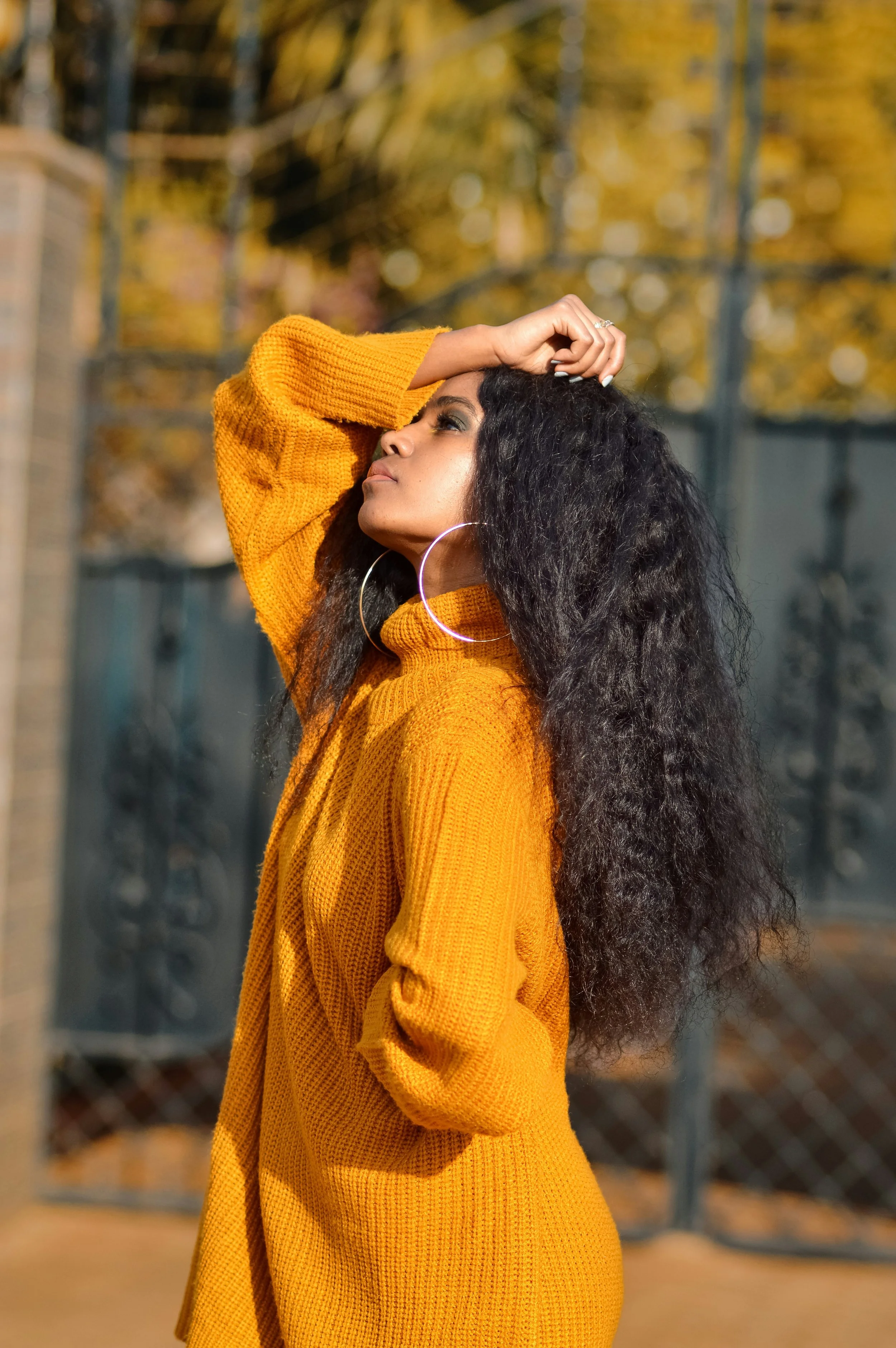
Bonnets have only really entered the global hair market relatively recently, but people with coily 4c hair have been wearing hair bonnets for a really, really long time to protect their hair.
There has been some conversation about whether people from different cultural backgrounds should be wearing bonnets, and whether it’s culturally insensitive to wear a bonnet if you have white skin or do not have 4c hair.
I think KimladBeauty (video below) says it best.
If you have hair, you should protect it with a bonnet.
Silk hair bonnet review
I chose a black hair bonnet by Strands of Silk, which is a small Australian business. I chose this particular one because silk was touted as the best bonnet material, and there were thousands of great reviews for this specific brand.
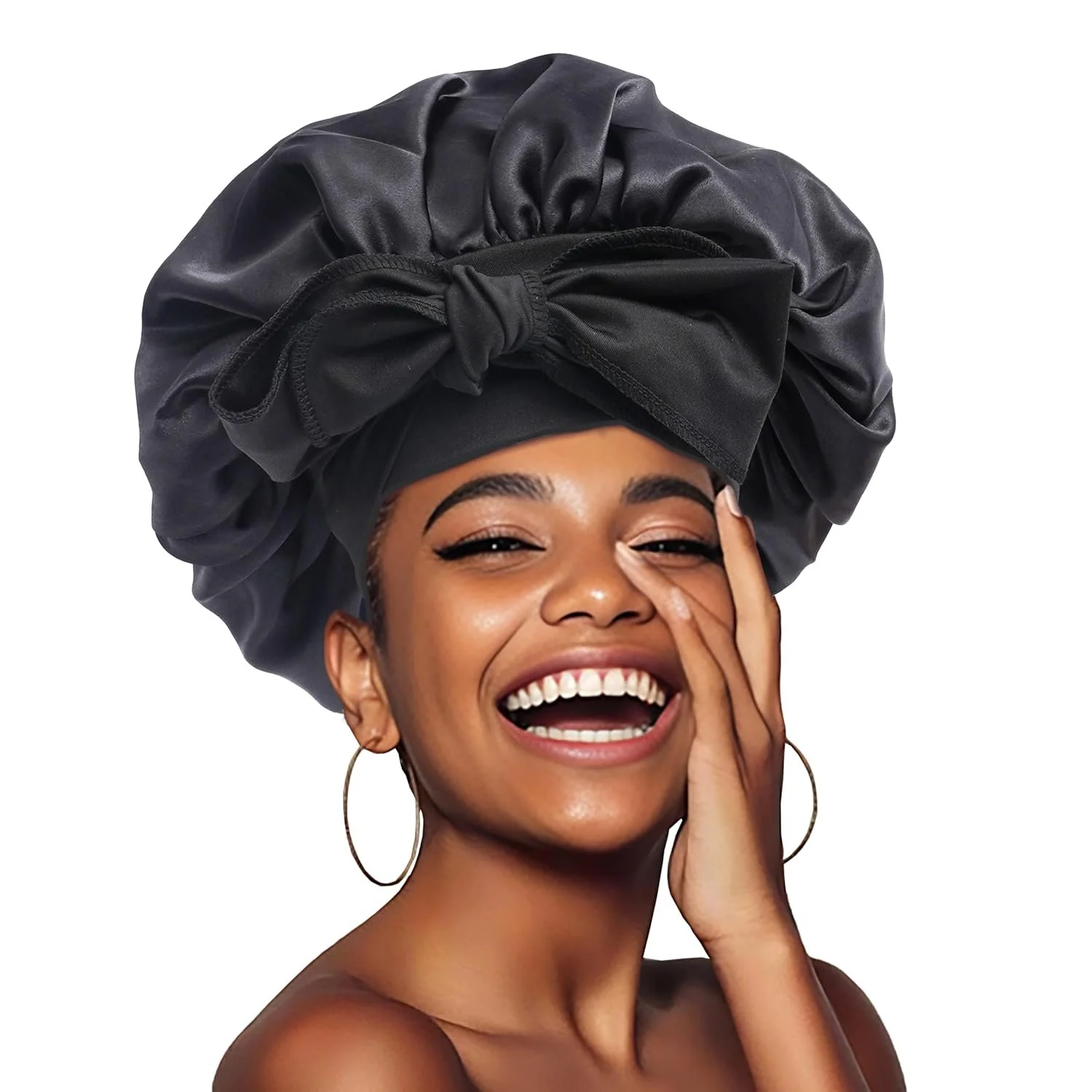
Strands of Silk bonnets have a single layer of silk, which means they’re very lightweight with no lining. They have a silk band around the edge that extends to two lengths of silk for tying at the back, with a few inches of elastic at the very back so they fit any head size.
To fit the bonnet over my hair, I tipped my head upside down and looped a satin scrunchie once around my hair in a loose top knot. Some people find that two scrunchie loops hold the hair in place more effectively, but I find there’s a dent in my hair the next day if the scrunchie is any tighter than a single loop.
Using my hands to expand the bonnet, I placed it over the top knot, stood up straight and pushed any loose bits of hair under the bonnet before tying it up at the bottom.
I went to bed, half expecting it to fall off overnight because there’s no elastic around the front.
But it didn’t.
I actually forgot it was there until I woke up the next morning and went to put my hand under my head. I took it off, shook my hair a bit upside down, and I was shocked.
My hair didn’t only keep its shape, it felt moisturised and healthier than it did when I went to sleep.
The result
I thought maybe those initial great results might not last, like most products that start amazing and fade over time. But that didn’t happen.
The silk bonnet, somehow, consistently locked moisture in and improved the quality of my hair.
There were nights when I struggled to get to sleep and tossed and turned a lot, which would have normally resulted in a knotted mess the next day - but not with the bonnet.
During the summer, it was so humid that I couldn’t sleep without a fan. Ordinarily, my hair would have suffered in that weather - there would have been matting due to the heat on my scalp interacting with my hair texture. But not with the bonnet.
My hair looked great. Every. Single. Day.
Not only did my hair largely remain in place inside the bonnet all night, but the silk was so light and breathable that overheating wasn’t a problem - even when it was 30C overnight.
Washing and detangling my hair was also so much easier. I didn’t have massive tangles anymore, breakage reduced significantly, and my hair looked smoother and tidier than it had in years. It didn’t take me half an hour to detangle in the shower anymore.
I was completely shocked. I thought it would make a difference, but I didn’t think it would improve the quality of my hair so drastically.
I’ll never sleep without one again.
How to choose a hair bonnet
Choosing the right bonnet is not an exact science…but it’s close. I didn’t know what to look for when I bought my bonnet, but fortunately, I happened to buy a really good one and quickly learnt what does and does not work.
For example, there was one very popular satin hair bonnet that I almost bought on Amazon. It had elastic and ties at the front to stop it from coming off overnight - it looked great.
As I was reading the reviews, I came across someone complaining about the lining of the bonnet. When I looked further into it, I found that while the outside of the bonnet was lined with satin, the inside was lined with cotton.
A cotton-lined bonnet defeats the purpose of having a bonnet at all. You may as well remove it and sleep straight on the pillow.
Why was it lined with cotton? Because the manufacturers don’t care about your hair, they’re only cashing in on the moment.
If you’re buying on Amazon, make sure you read the descriptions carefully. A lot of sellers have jammed ‘silk’ into the product description to get more exposure, but their bonnets are actually satin. Some bonnets are also promoted as ‘silk satin’, which is not a thing. It’s either silk or satin; make sure you know what you’re getting.
If you get the wrong one, you’ll probably be less inclined to try another and that would be a tragedy because a good one will change the quality of your hair.
Even if a good one costs a bit more, it’s absolutely worth it.


What bonnets are better, satin or silk?
There are so many different kinds of bonnets, and they come in a range of styles and at different price points.
They’re pretty cheap on Amazon, but a bonnet is the kind of thing you only want to buy once - get a good one, they are not all made equal.
Your two choices are satin and silk.
The silk bonnet is by far the most effective. It’s light, breathable, locks in moisture as you sleep, and your strands glide over the material all night, which means your hair retains its shape and looks fabulous for days.
A good-quality satin bonnet can achieve similar results as a silk bonnet, but it’s not the most effective.
Silk is so light that your scalp can breathe overnight (particularly good in warmer climates), but satin is a thicker material and it’s usually byproduct of plastic, which can result in static and heat retention. This can sometimes lead to matting and tangles if you’re not getting good quality satin.
So, what do you choose? I have broken down a few options below along with some key considerations.
-
Satin bonnets are the most accessible and widely used option today. Satin refers to a weave, not a fibre, and most satin bonnets are made from synthetic materials like polyester. The smooth surface reduces friction between the hair and pillowcase, helping to minimise breakage, tangling, and frizz during sleep. Satin bonnets do not absorb moisture the way cotton does, which can help hair feel less dry by morning. They are often chosen as a vegan and affordable alternative to silk, though the synthetic fibres are derived from petrochemicals and may be less breathable.
-
Mulberry silk bonnets are made from silk produced by silkworms fed exclusively on mulberry leaves. This type of silk is known for its long, uniform fibres, which create a very smooth and breathable fabric. Mulberry silk reduces friction effectively and regulates temperature well, making it comfortable to wear overnight. However, traditional mulberry silk production involves boiling the cocoons with the silkworm inside, which raises ethical concerns for those seeking cruelty-free or vegan products. Mulberry silk bonnets are also more expensive due to the labour-intensive production process.
-
Peace silk bonnets, sometimes called ahimsa silk (which means ‘non-violent’), are made by allowing the silkworm to complete its life cycle and emerge from the cocoon before the silk is harvested. This approach avoids killing the silkworm, making peace silk a more ethical alternative. Because the silk fibres are shorter and less uniform after the cocoon is broken, peace silk fabric is typically less smooth and more textured than mulberry silk. As a result, peace silk bonnets may not reduce friction quite as effectively, but they offer a compromise between performance and ethics. There is some debate about the treatment of the moths once they emerge from their cocoons but, as with everything, check the manufacturer before buying.
-
Bamboo silk is a textile marketed as a silk-like fabric made from bamboo, but it’s not chemically or structurally the same as real silk.
Most bamboo silk is actually bamboo viscose or bamboo rayon. The bamboo plant is broken down through a chemical process that dissolves the cellulose, which is then re-extruded into fibres. The end result is a regenerated cellulose fibre that feels smooth and soft, but it is no longer bamboo in its natural form.
Bamboo silk is smooth, breathable, and has a sheen similar to silk, which is why it is often used in bedding, scarves, and hair accessories like bonnets and pillowcases. However, its performance depends heavily on how it’s manufactured. Some bamboo viscose fabrics are tightly woven and reduce friction well, while others are less durable and prone to pilling.
How does the bonnet stay on your head?
You want a bonnet that either has elastic around the edges to stop it from falling off overnight, or ties at the front or back that will not get in the way when you sleep.
A thick bow at the front might look cute, but do you sleep on your front? What about when you roll over? It will probably get in the way. I chose one with slim ties at the back and I don’t notice it at all during the night.
What’s the bonnet material?
Is your satin or silk breathable? If you go the satin route, you want to check that it’s quality satin and that your hair and scalp can breathe underneath it.
The idea behind the bonnet is that it removes friction and prevents strands from breaking and weakening - your hair should easily glide over the bonnet as you sleep.
Check the lining of the bonnet
The fabric inside the bonnet is the most important part because that’s where your hair goes. Is the bonnet a single layer of silk or satin, or is it lined with another fabric inside?
The lining is one of the most important features.
Is the bonnet thick or bulky?
The best bonnet, in my opinion, is the one that doesn’t interrupt your sleep. You basically want to put it on, go to bed, and forget you’re wearing it.
What size bonnet do you need?
Hair bonnet sizes often refer to hair length and bulk, rather than head size. I learnt that the hard way.
I have a small head and I buy small hats, so I didn’t think twice before buying a small bonnet. That was the wrong choice.
When my hair was mid-length, it was difficult to fit it all into my small bonnet. I have fine hair so I can squish it all under the bonnet, but it’s a bit annoying and takes a bit longer than I’d like. I really should have gone with a medium.
If you have ear-length hair or a pixie cut, go with a small. If your hair is thick and/or has a lot of bulk, you might want to consider a large. Each retailer should have sizing information.

Ethical silk hair bonnets
There are a couple of ethical silk bonnet options, if you don’t want to use silk or satin.
Peace Silk
Peace silk is still manufactured with animals, but the silk worm was allowed to transform into a moth and emerge from its cocoon, unharmed.
Soluniere is a good peace silk option, based in Europe but ships internationally.
T.Berry is based in India, also ships peace silk bonnets internationally.
Bamboo silk
Bamboo silk is not manufactured with animals and is the most ethical option.
Curly Life is an Australian-based company that makes bamboo silk bonnets.
Clementine Sleepwear also does a bamboo silk bonnet, based in the US.
So…what are you waiting for?
Silk bonnets do not prevent hair loss, but they can reduce breakage and help hair stay healthier over time.
I was shocked at the difference in my hair after using a silk bonnet at night. I’m still amazed at how healthy and hydrated my hair feels every morning when I take the bonnet off.
If you’ve been thinking about trying the bonnet but haven’t made the leap, this is your sign to try it out.
Have you tried a bonnet? Let me know in the comments below!
You Might Also Like…






I tried three types of magnesium to stop sleep anxiety. Here’s what worked, and what didn’t
Magnesium has become a popular over-the-counter sleep aid, with research suggesting it calms the nervous system and helps with sleep regulation. But does it actually send you to sleep and help sleep and sleep anxiety? I tried three and found the best one.
Magnesium has become a popular over-the-counter sleep aid, with research suggesting it calms the nervous system and helps with sleep regulation. But does it actually send you to sleep and stop sleep anxiety?
I have struggled with sleep anxiety for years, which means I get very worried that I won’t be able to either fall asleep or stay asleep. Once I wake at night, it’s very difficult for me to get back to sleep—it can take about four hours for me to feel tired again, which ends up being half the night. My anxious brain fears this happening, to the point where I can’t sleep. It’s a horrible cycle.
Lack of sleep has a range of long-term health implications if not dealt with, but it also has a huge impact on your hair, skin, eyes — you name it. Your skin can’t glow and your hair can’t grow long and strong. For me, the skin under my eyes went dark, fine lines were more pronounced, and my overall energy was lacking and I couldn’t concentrate. Not only did I feel tired, I looked and sounded tired. And I was sick of it.
After years of taking melatonin supplements (more about that at the end of this post), my partner got a tub of magnesium and suggested I drink it before bed. Here’s what happened.



How magnesium impacts sleep
Higher levels of magnesium in the body can deliver longer sleep times and less tiredness during the day. Studies have also found that magnesium supplementation helped with falling asleep faster and protected against waking up earlier than intended. You can read more about that here.
But not all magnesium supplements are made equal.
Magnesium citrate is a magnesium salt of citric acid. It is largely used as a dietary supplement to provide magnesium, an essential mineral that plays a crucial role in many bodily functions. It can also support muscle function, nerve function, and overall energy production.
Glycinate is an amino acid. It has high bioavailability when combined with magnesium, meaning that the body can absorb and utilise it effectively. It also enhances the absorption of magnesium.
The supplements I tried were in powder form, they were flavoured without sugar, and came with scoop measurements. One scoop was dissolved into a glass of water and consumed before bed.
The brands and varieties listed below are Australian, but I have included links to brands iin tother countries hat effectively do the same thing.

Magnesium Citrate
The first supplement I took was Swisse High Strength Magnesium Powder, which is a magnesium citrate for muscle function, relieving muscle cramps and supporting energy production.
It helps with sleep indirectly because it raises your general magnesium levels—it’s not specially formulated to help you sleep better. In other words, it won’t send you to sleep, but it will promote muscle relaxation to help you have a deeper sleep when you go to bed.
This one did contain glycinate, but not a lot—it was mostly citrate. The total magnesium content per scoop is 300mg. I took it just before bed, but I didn’t expect much of a difference.
At the time, I was having trouble staying asleep.
I was waking up a lot at about 2.30 am and struggling to go back to sleep. It was awful. My sleep quality was better from the first night I took the supplement. I didn’t notice a massive difference, but I did feel more relaxed and less irritable.
On the nights I took it, it wasn’t as hard for me to get to sleep and stay asleep.

Magnesium Glycinate
We ran out of the citrate version and bought the glycinate version instead.
First, we had the Ethical Nutrients Mega Magnesium Night Powder. This was mango passionfruit flavoured and it worked much like the citrate version, though maybe slightly better. If there was a difference, it was small.
We then tried the Bioglan Active Magnesium PM Deep Sleep Powder. Not because we had read about it or anything, but because it was on the shelf in the store. It came in powder form and was citrus-flavoured.
I dissolved one scoop into a glass of water, drank it and went to bed. I had assumed I would have the same reaction to that one as I did with the citrate version—going to sleep would be slightly easier, but I didn’t think too much about it.
I think it changed my life.
The first night, I was tired within about 20 minutes and fell asleep with ease. I woke up to my alarm and felt as though I had been very deeply asleep. I wondered if it was a once-off, but it wasn’t. Every night I took it, I woke up in the morning feeling as though I had been deeply asleep.
It also made me tired, which meant getting to sleep was significantly easier. My sleep anxiety was almost non-existent on the nights when I took it. It felt as though I’d taken melatonin, but without the side effects.

Not all supplements are made equal…
It made sense that the citrate didn’t have a huge impact on sleep because it’s not specifically designed to help you sleep. What I couldn’t work out was why my reaction to the two products with glycinate was so different, until I looked at the dosage for each product.
The magnesium citrate dosage per scoop was 300mg. The Ethical Nutrients magnesium glycinate dosage per scoop was also 300mg. The Bioglan magnesium glycinate dosage per scoop was 350mg. An extra 50mg of glycinate seems to make a massive difference.
| Swisse High Strength | Bioglan Active PM | Ethical Nutrients Mega | |
|---|---|---|---|
| Main Benefit | Muscle function, energy, tiredness relief | Deep sleep, reduces time to fall asleep | Calm mind, relax muscles, support healthy sleep |
| Specific Sleep Support | Indirect (due to magnesium) | Yes (with California Poppy & Hops) | Yes (with Passionflower & Glycine) |
| Magnesium Form(s) | Magnesium Citrate, Magnesium Glycinate (300mg total Mg) | Magnesium Glycinate (350mg total Mg) | Magnesium Glycinate (300mg total Mg) |
| Additional Ingredients | Vitamin C, Zinc, Calcium | California Poppy, Hops | Passionflower, Glycine |
| Flavor | Orange | Citrus | Mango Passion |
| Sweeteners | Monk fruit, Stevia | Sucralose | Stevia |
| Recommended Timing | Any time of day | Evening, 1 hour before bed | Once daily before bed time |
Melatonin supplements
I discovered melatonin in 2017, and it was a game-changer. I couldn’t believe it took me until 2017 to find it, and that more people didn’t use it. Even if I was wide awake at 10 pm, when I wanted to be asleep, melatonin would fix that problem right up, and I’d be asleep within about 30 minutes of taking it. I thought it was magic, until I learned it wasn’t.
Melatonin is a hormone that your body naturally produces to regulate your sleep-wake cycle, or your circadian rhythm. This means melatonin in pill form is basically a hormone. There is limited research into long-term use of melatonin, but there are suggestions that it can impact your hormones overall, it can also have a negative effect on your circadian rhythms. You can also develop a tolerance to it, which means it eventually might not work for you at all.
That is what happened to me. I used to take 2.5mg, but eventually that didn’t do anything. I started taking 5gm and that was better but eventually faded. I took 7.5gm twice and decided I’d had enough. Taking that much hormone isn’t good for you.
Verdict
There’s no competition, magnesium glycinate is the best supplement for sleep. I slept deeply, I wasn’t groggy in the morning, it’s not a hormonal supplement, and there are no side effects.
Is there another method that works for you? Let me know in the comments below!
Like it? Pin it!

You might also like…
AFFILIATES
I use affiliate links and advertising on this site, which just means that if you buy a product through a link on this site, I'll get a small commission (not all links are affiliate links). This is because all the content I provide here is free, and I want to keep it that way :)



Silk bonnets for sleeping have surged in popularity with people of all ethnicities and hair types. They’re meant to reduce frizz, breakage, and help prevent hair loss. But do they work? And how do you choose one?